Libby Brodie is one of the people behind Theatre Uncut. She tells me why the Arts aren't just about men in tights and how she thinks the political voice of theatre is underused in today's society.
Monday, 4 April 2011

Sunday, 3 April 2011
Snipping Away at the Arts: Theatre Uncut
In the current 'cuts climate' it's easy for people to shun the Arts in favour of protesting about cuts to the NHS. In fact until recently, it seemed even the Arts were shunning themselves. The 'I Value the Arts' Campaign seemed to be the only group around to have a popular (and by popular I mean social media related) presence...
But of course, it's in keeping with the nature of the beast to build up suspense. And boy was it worth it.
Ever since George Osborne made that lengthy speech on a hazy autumn day, a narrative of blame, anger and Clegg hating has shaped almost every news bulletin and report. (One might almost think thank goodness for Libya. At least it gives us a bit of a break.) But, one sector that has remained pretty quiet is the Arts. Despite seeing a significant blow to their one of their only champions- Arts Council England-any anger has been overridden by the charging students and workers.
To put you in the picture, The Arts Council has to make a 30% cut to its spending by 2015. Last week, this figure was translated into real terms as 600 organisations were refused funding and many more saw their budgets slashed dramatically. Museums Sheffield was one of the victims, losing all its ACE support as did several other Yorkshire based arts groups.
Enter stage left: Theatre Uncut.
This nationwide protest, culminated in a day of ferocious performances across the UK and certainly packed a punch. It began, as all the best plans do, as a discussion in a humble kitchen, between friends Hannah Price, Libby Brodie and Mark Ravenhill. They decided that the 'political voice of theatre' should be utilised in some way against the cuts made in the Government Spending Review.
Soon after the kitchen conversation, they secured the performance rights of eight plays, by some of the UK's leading playwrights, about various types of public sector cuts. Lucy Kirkwood, Dennis Kelly, David
Greig, Laura Lomas, Anders Lustgarten, Mark Ravenhill, Jack Thorne and Clara Brennan all produced original short plays for the cause. The performances began up to a week before, but ended on the 19th March with hundreds of people performing them across the country.
The plays, some monologues, the rest with up to three actors encompassed a wide range of issues...disability allowance, mental health funding, drug rehabilitation and bankers bonuses...but all had one thing in common, the reminder that the cuts to our public sectors run deeper than any of us can begin to imagine.
The most moving of the eight were the two monologues, Fragile by David Greig and Hi Vis by Clara Brennan (both directed by Sean Linnen in Sheffield's take on Theatre Uncut). I wasn't the only one left in tears by the mother figure in Brennan's play, who explained how her disabled daughter was missing the vital support she had once received. She explains how as parents they care for their daughter themselves, covered in blood and shit, she is hauled from bed to bath. No quality of life, and even less now the public sector cuts take their toll on Council services.
Then came 'Jack' the once drug-addled youth who depends on the support he receives from 'Caroline' and the others 'down the centre'. We're all guilty of thinking these kind of people don't matter...but Greig makes us see that if the precious few who do care are no longer there, then there really is no hope at all. Jack may be riddled with paranoia and anxiety, but he's smart. Really smart. And quickly works out that 'freelance' means 'redundancy'...from the sounds made by the audience it seems this turn of phrase is all too familiar.
But What makes Fragile really clever is that 'because of austerity measures' the audience play the part of the carer, Caroline. As a result her words are formal, mechanical and unfeeling...a tone not far removed from that of the MP's we hear on the news.
Most startling is how current the plays are. There are references to Mohamed Bouazizi and Tunisia and the student protests. And, as the characters of Jack Thornes play Whiff Whaff ask the ultimate hypothetical question 'What would David do?' the audience shifted uncomfortably in their seats.
Libby Brodie, one of those behind Theatre Uncut, told me that they were conscious not to make it 'about theatre, by theatre people' and that it isn't 'just theatre for theatres sake', and I promise you it isn't. Strangely, not one of the plays is about the cuts to the arts, but I soon realised that they don't have to be. The very method of performance and the poignant conveyance of passion, despair and disappointment with our current Government is enough to convince anybody that the Arts need to be protected. If only to make more stands like this.
Keep an eye out for my interview with Libby Brodie which I'll be posting in the next couple of days.
Theatre Uncut was performed at The Crucible in Sheffield on 19th March.
Directors: Daniel Evans, Jonathan Humphreys and Sean Linnen
http://www.theatreuncut.co.uk/
Directors: Daniel Evans, Jonathan Humphreys and Sean Linnen
http://www.theatreuncut.co.uk/
Saturday, 5 March 2011
Apples and Pears
Preparation for my next assessment has seen me spending a lot of time in Castle Market, Sheffield. And I've fallen in love with the place and the people who work there. I'll be posting the whole project at a later date but heres a few of the photos I've been taking.


If you're down Castlegate way pop in and buy yourself something for tea. Footfall at Castle Market is down and rents are going up by 40%, the stallholders need the support of the city to fill the void the lack of Council input has left.
Wednesday, 2 March 2011
Back in Time
This has nothing to do with Sheffield but is the most exciting photography project I think I've ever seen.
http://irinawerning.com/back-to-the-fut/back-to-the-future/
People return to the photographic poses they struck as a child.
Seriously gorgeous.
http://irinawerning.com/back-to-the-fut/back-to-the-future/
People return to the photographic poses they struck as a child.
Seriously gorgeous.
Sunday, 27 February 2011
Saturday, 26 February 2011
Human Nature
Ever wondered where you came from?
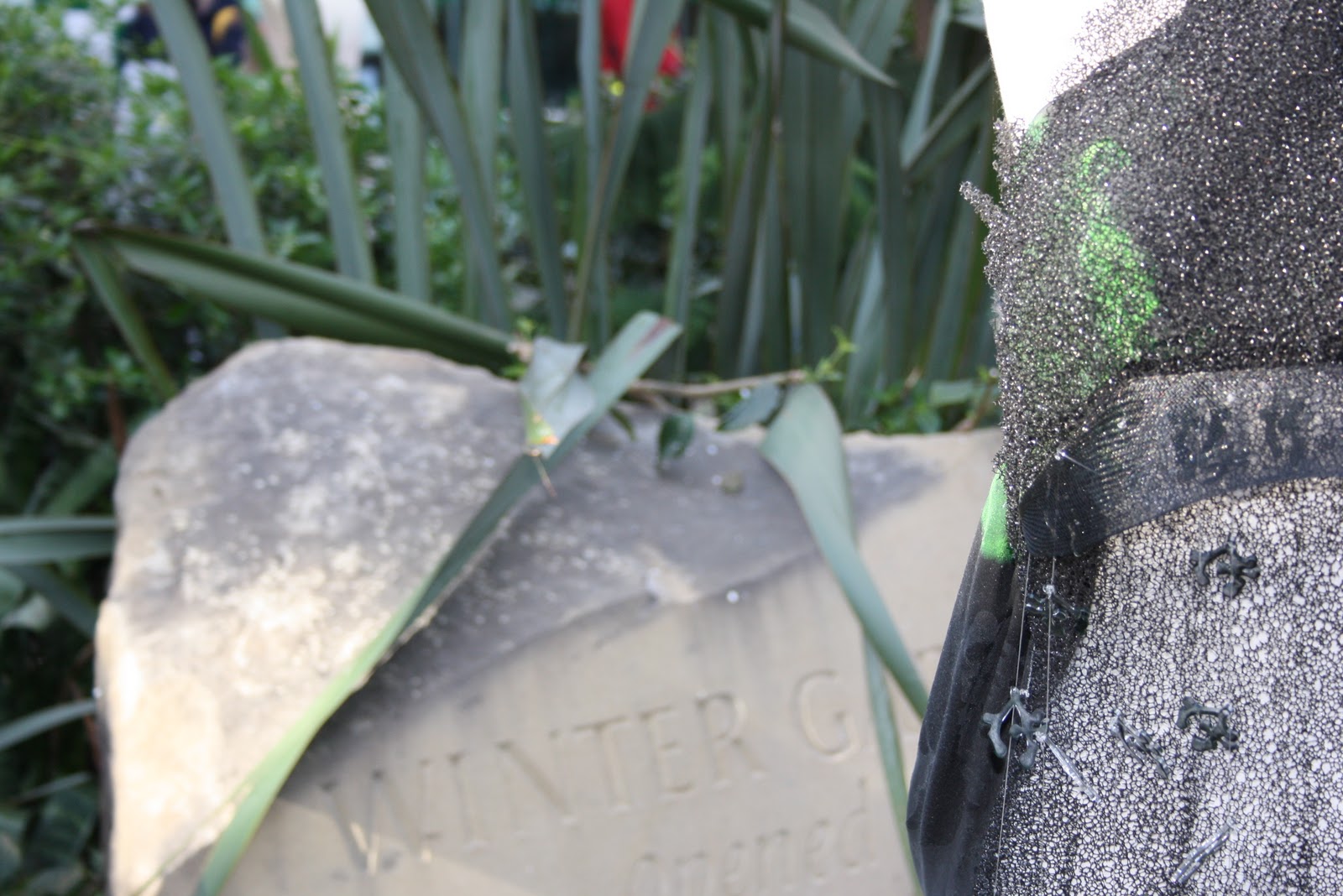
Well, if you stop by the Winter Gardens this month you can find out in a very unique, and beautiful, way. Primitive Streak is a 'science-art-fashion-collaboration' by sisters Kate and Helen Storey and it's found a temporary home in Sheffield's plant infested hotspot until March 10th.
 The collection of 27 dresses chart the first 1000 hours of human life, from fertilisation and the uncomfortably named 'Sperm Coat' to the formation of the heart in a spectacular scarlet number. Not all the dresses are on show this month but the few that have been chosen are certainly some of the most fascinating. Fashion designer Helen, who has worked for both Valentino and Lancetti and won several prestigious awards for her work over the years joined forces with her scientist sister, Professor Kate Storey in 1997. She had already been drawn to the fusion of science and art in previous projects but Primitive Streak was something different.
 The pair infused Helen's creativity and skill with Kate's professional scientific research and came up with the textile based collaboration. Since 1997 the collection has toured the world and enthralled audiences.
 I spoke to Helen this week when she was in Sheffield setting up the exhibition. She said that she hopes 'the fusion of art, fashion and science will bring in new audiences of every age, sex and culture'. She also described how the basic element of 'fashion' makes the potentially complex theory behind the work more accessible because, 'noones afraid of a frock'. When asked about the location she admitted that she had a bit of a soft spot for The Steel City, saying that she felt her way of thinking was very welcome here and that her long history with the city was founded in the warmth of the people to new ideas.
 Walking around the dresses with Helen made the collection seem even more groundbreaking, I realised I'd never seen cell division made so explicit and so striking. Set upon an ivory shift dress, the process of anaphase is no longer a confusing, slimy scientific process but a corsage or brooch you wouldnt mind wearing on your tailored jacket. Similarly, fertilisation isn't an internal messy, sticky consequence of sex but a long delicately woven gown I'd quite happily don for a summer wedding. And suspended above the whole collection is a hat that, while embodying the formation of the heart, wouldn't look out of place at Ascot...or dare I say it, on the head of her Madge.

I'm completely taken by the exhibition and despite some of the dresses needing a bit of touching up in places, they are still as fascinating as the day they were made.
Find out more about Helen and Kate here:



Sunday, 13 February 2011
Exhibit C
Some of the images are from the past month, The Moor and its graffitied words of inspiration appear next to images of the city’s high rise buildings. There are photos of trams, famous buildings and the city’s people dating back to the early 70’s. All the photos are taken by those who know and love the Steel City
Two photographs in particular that resonate behind the glass are an unnamed shot of the Madina or Wolseley Road Mosque and that of a Royal Mail postbox (more interesting than it sounds.)
The first shows the centre of worship in all its glory, with its emerald dome rising up amongst the red brickwork of the terraced houses around it. The colours are subtle yet stunning; Eastern opulence versus Northern grit.
The second caught my eye as soon as I approached the window, framed solidly it is on first glance a sharp shot of a Royal Mail Postbox, but the embossed ‘GR’ that features on the front of all of these beauties has been defaced by the clever addition of three letters, A N and Y. The word ‘ANGRY’ glares out from the scarlet paintwork of the pillar box. It’s an image that reminds us of past traumas the city has faced, most notably being at the centre of Maggie T’s tirade on the miners in the 80’s, but also captures a more recent sentiment felt by the city- betrayal by their own. Nick Clegg’s relationship with the city is beyond repair.
It’s a funny little display but it captures my attention every time I walk home. So, next time you’re down near Primark take a few more steps and have a gander.
http://www.facebook.com/#!/group.php?gid=25750519904&v=info
Subscribe to:
Posts (Atom)